
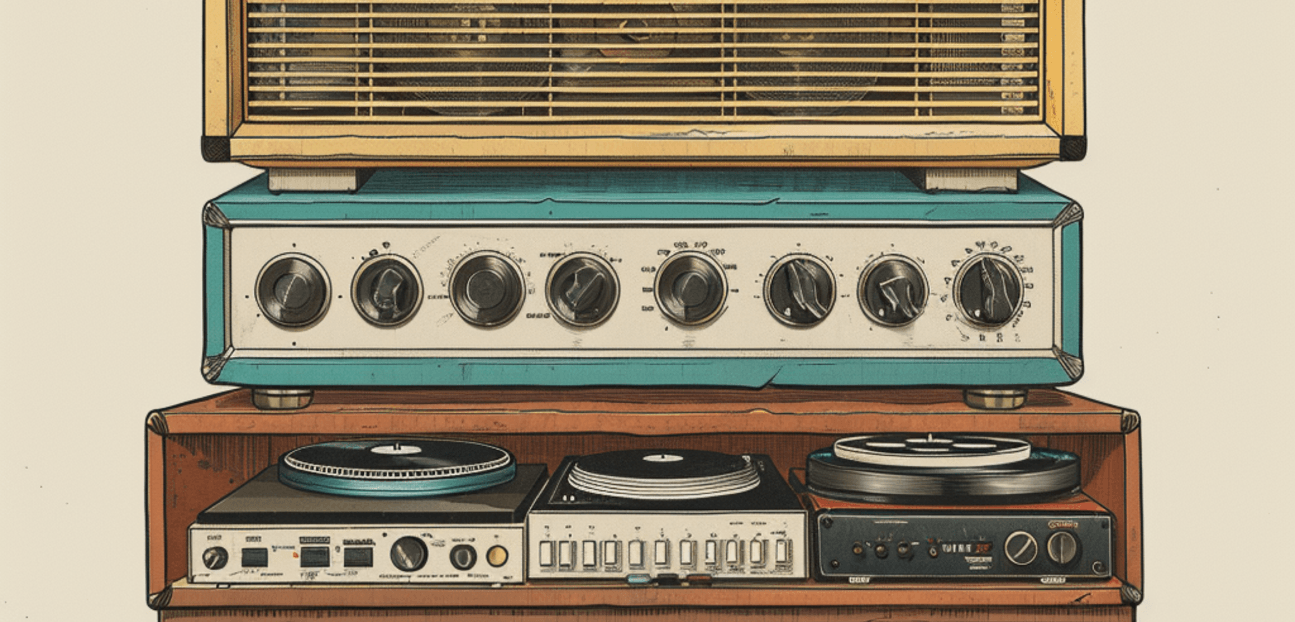
Introduction
In today’s world, where we’re surrounded by cutting-edge audio technology, it’s easy to take sound for granted. But have you ever wondered how we got here? The history of sound technology is a journey filled with remarkable innovations, from the earliest acoustical devices to the wireless wonders of today. Let’s embark on a sonic voyage through time and explore the evolution of sound systems.
The Birth of Sound Technology
Our journey begins in the late 19th century, a time when sound technology was in its infancy. Before the invention of recorded sound, people relied on live performances, and the idea of capturing and reproducing sound was revolutionary.
1. Phonographs and Gramophones (Late 19th Century)
The phonograph, invented by Thomas Edison, was the first device capable of both recording and reproducing sound. It used a stylus to etch sound waves onto a rotating cylinder covered in wax. Later, the gramophone, developed by Emile Berliner, introduced flat records and the use of discs instead of cylinders. These early devices marked the dawn of recorded sound.
2. The Age of Radio (Early 20th Century)
As we moved into the 20th century, the invention of the radio brought sound into homes. Radio broadcasts allowed people to hear news, music, and entertainment from around the world, revolutionizing the way we consumed audio content. The term “wireless” was coined to describe this new form of communication.
3. Vinyl Records (Mid-20th Century)
The 1940s and ’50s saw the rise of vinyl records, which became the primary medium for music consumption. These records used analogue technology to capture sound vibrations in grooves, and turntables translated these grooves into audible music. This was the start of allowing users to decide what was played on their individual device.
4. Cassette Tapes and Compact Discs (Late 20th Century)
The introduction of cassette tapes and compact discs (CDs) marked a shift towards more portable and convenient audio formats. Cassette tapes were popular for their ease of use, while CDs offered digital sound quality and durability.
5. Digital Revolution (Late 20th Century to Present)
The late 20th century brought the digital audio revolution. Digital audio files, such as MP3s, made it possible to store and transmit music and audio through digital means, greatly changing how we consumed and shared sound. MP3 players and later, smartphones, became the new sound systems of choice.
6. Wireless and Smart Audio (21st Century)
The 21st century ushered in a new era of sound technology, marked by wireless audio and smart devices. Bluetooth speakers, wireless headphones, and smart speakers like the Amazon Echo and Google Home brought convenience and flexibility to our audio experiences. You can now listen to music from your phone, control your smart home, or even have a conversation with a virtual assistant.
Conclusion
The history of sound technology is a testament to human innovation and our unending quest for better audio experiences. From the scratchy sounds of early phonographs to the crystal-clear streaming of today’s wireless devices, we’ve come a long way.
As technology continues to advance, who knows what the future holds for sound systems? What we do know is that the journey through sound technology has been a remarkable one, and it’s a journey that will continue to shape the way we hear the world around us. So, next time you put on your favourite song or ask your smart speaker for the weather forecast, take a moment to appreciate the incredible history of sound technology that got us here.
How do I begin the process?
You can start your enquiry in a variety of ways. You can fill out the form on our website, contact us via the email address and phone number in the contact us section or messaging us on our social media profiles.
How long does the process take?
We will work to your timeframes, whether your project is currently on site or still years away, we will work with you to build a timeline to match your specific needs.
How much does a custom installation job cost?
Costs for custom installation jobs vary depending on factors such as your budget and specific requirements. Rest assured, we prioritize transparency and will guide you through the costs, presenting different options tailored to your needs and budget.
I don’t know much about AV, is this a problem?
Not at all! Our team is dedicated to guiding you through your options and explaining how they work. We’re committed to helping everyone, regardless of their technical knowledge, achieve their goals and dreams in the audiovisual realm.
Will you install the technology?
Yes, our team of expert, friendly engineers will come out to your project to ensure that all the kit is installed properly, with both aesthetics and technical advantages in mind.
What happens if there is a problem?
Certain solutions can be assessed and have problems fixed remotely, for situations where that isn’t possible where are available via phone or e-mail to offer solutions or send an engineer out to look at the fault.
Do you offer maintenance services?
Yes, we offer maintenance services to keep your system in optimal condition. This may include regular inspections, cleaning, and firmware updates to ensure peak performance and longevity.
How secure are your systems against cyber threats?
Security is a top priority for us. We employ industry-leading encryption and security protocols to safeguard your system against cyber threats. Additionally, we regularly update our systems to address any emerging vulnerabilities and ensure maximum protection.
What if I want to make changes or upgrades to my system in the future?
We understand that your needs may evolve over time. That’s why we offer scalable solutions that can easily accommodate changes or upgrades. Whether you want to add new features, expand your system, or upgrade to the latest technology, we’re here to help.
Is training provided for using the system?
Yes, we provide comprehensive training to ensure you’re comfortable using your system. Our experts will walk you through the functionality and operation of your system, answering any questions you may have along the way.
What warranties do you offer?
We stand behind the quality of our products and services. Depending on the specific components of your system, warranties may vary. We’ll provide you with detailed information about warranties and coverage at the time of purchase.
What happens if there’s a power outage or technical issue?
In the event of a power outage or technical issue, our system is designed to automatically restore functionality as soon as power is restored, or the issue is resolved. Additionally, our support team is available to assist you with any technical issues or concerns you may have.
What is CCTV monitoring
Modern camera’s have features which can be used to detect when things happen such as someone entering a premises, monitoring companies are able to see when this happens to check what the situation is and alert you and/or the authorities to provide an additional layer of security. This is something we can help you with if it’s something you were looking for.
How many cameras do I need for my property, and where should they be placed?
This varies based on requirements, budget, personal preference and size of the property, we will help you to understand the ideal number of cameras for your situation as well as where to place them for optimal coverage
Can CCTV cameras work at night or in low-light conditions?
Yes, there is a variety of options on how to achieve excellent CCTV coverage even at low light levels
How do I access and view footage from my CCTV system remotely?
There are a variety of solutions, but our most popular solution is an app based system allowing you to monitor all cameras instantly directly from your phone, as well as the ability to see past footage, highlights where the camera picked something up as well as phone notifications when something happens.
How can I integrate audio systems with other home automation devices?
Sound systems can be entirely integrated with your home automation system as well as the ability to have control of this system from your phone
How do I control the volume and source of audio in different areas of my home?
It is as easy as going into your app, choosing which speakers you want to add to the zone, and controlling the volume and music directly from the app
What is smart lighting, and how does it differ from traditional lighting systems?
Smart lighting has a variety of benefits such as dimming, automation, change of colour and more, this allows for much more flexible solutions which are also easier to use and take a room to the next level
Can smart lighting systems be controlled remotely or through voice commands?
Yes, certain lighting control systems work alongside voice control and app-based solutions, as well as home automation systems
How can lighting systems enhance security and ambiance simultaneously
Smart lighting has function as well as form, for example lighting that works alongside CCTV to switch on when a certain area is crossed, this alerts you, acts as a deterrent to an invader and provides enhanced lighting to improve CCTV quality
What is access control, and why is it important for home or business security?
Access control is simply controlling who can access a certain location, every home already has this in the form of a lock and key, but there are ways to make this smarter, easier, and more secure